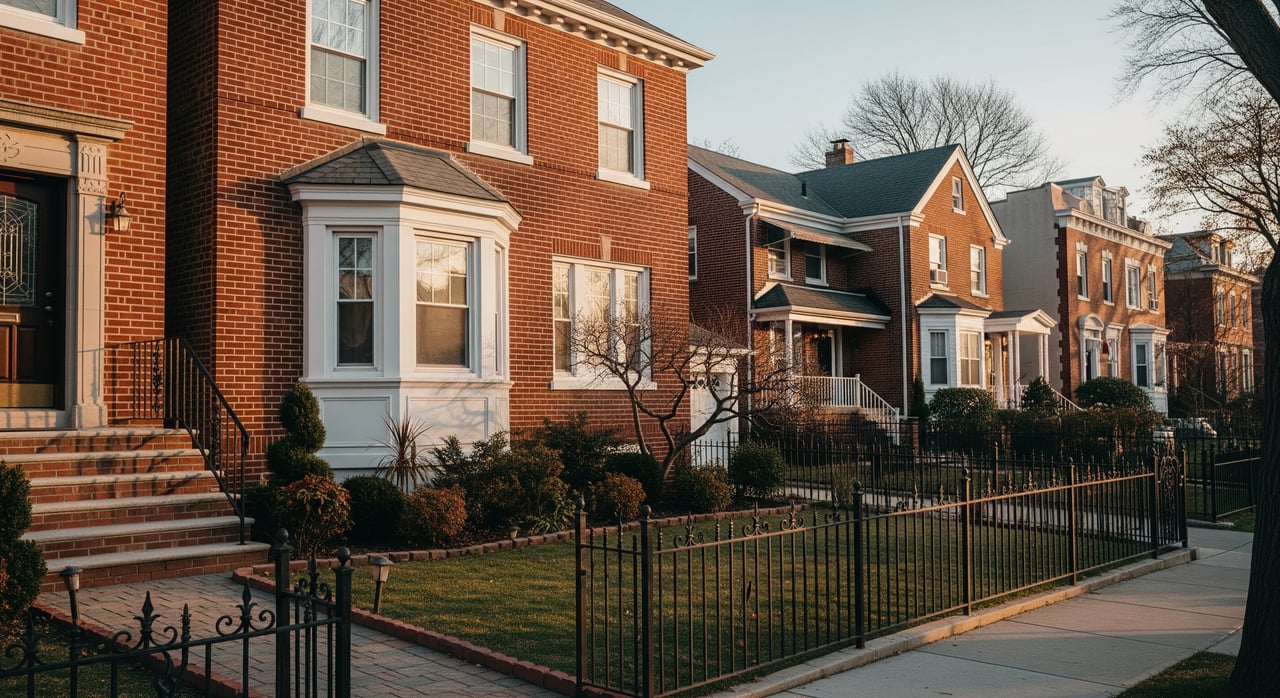
If two homes sit only a few blocks apart in Jerome Park yet list at different prices, transit is often the reason. Your door-to-door commute, walk time, and whether you get a one-seat ride can shape both what you pay and how buyers respond to your listing. In this guide, you’ll learn how proximity to the Bedford Park Boulevard subway stops on the 4 and D lines and express and local buses near Lehman College show up in pricing. You’ll also get practical steps to evaluate a listing or position your home for sale. Let’s dive in.
Why transit access matters here
Jerome Park and Bedford Park have unusually rich transit for the Bronx, but access is not uniform block to block. The area has two separate Bedford Park Boulevard stations, plus express bus stops near Lehman College that attract Midtown-bound commuters. Walk-sheds, service frequency, and whether you avoid transfers all affect value. Small distance differences can matter, especially when the trade-off is a faster or less crowded ride.
Know your stations and stops
Two different Bedford Park Boulevard stations
There are two stations with similar names that people often mix up:
- Bedford Park Blvd–Lehman College on the D line along the Concourse.
- Bedford Park Blvd on the 4 line along Jerome Avenue.
These are separate physical stations. For many households, the walk between them is non-trivial. When you evaluate a property, treat them as different access points with different walk-sheds and different service profiles. Use the MTA subway map to visualize entrances and likely walking routes.
Express bus options near Lehman College
Express bus stops by Lehman College, including the BxM4, provide a one-seat ride to Manhattan. For commuters who prize a direct trip, this can be a powerful substitute for a subway transfer. Local routes like the Bx25 and Bx26 improve cross-neighborhood connectivity and help you reach other lines. Check current stop locations and schedules on the MTA Bronx bus schedules page.
What shapes the price impact
Service quality drives value
Buyers respond not just to being near a station, but to what the service delivers. Frequency, reliability, and crowding, plus whether you avoid a transfer, are the big factors. Faster door-to-door travel times to Midtown or Lower Manhattan tend to command more interest. You can review timetables and GTFS-derived headways on the MTA developers site and compare peak versus off-peak patterns.
NYC-specific patterns
In New York City, the baseline transit access is high, so distance-based effects are often modest within a neighborhood. Still, lines with more direct Manhattan routings or an express bus that offers a one-seat ride may carry a noticeable local premium. Academic research generally finds that proximity to reliable rail service can support higher prices, while bus effects are more context dependent. In dense markets like the Bronx, the premium exists, but block-to-block differences are smaller than borough-to-borough gaps.
Trade-offs near the elevated 4
Access can increase value, but disamenities can reduce it. Along parts of Jerome Avenue, the 4 runs on elevated tracks. Noise, vibration, and sidewalk activity may offset some convenience benefits on the closest blocks. Many buyers favor a location just outside the immediate shadow of the elevated line, which can still deliver a short walk without the same noise exposure.
Micro walk-sheds: what to expect
Think in walk-shed bands rather than a single “near the train” label. A common set of bands is 0 to 200 meters, 200 to 400 meters, and 400 to 800 meters. Per the research literature, here is how many buyers and renters evaluate the trade-offs:
- 0–200 m: Fastest walk with the strongest access signal. Some buyers will pay up for convenience, especially if the stop offers frequent service or a one-seat commute. On elevated segments, audit noise carefully.
- 200–400 m: Often a sweet spot for value. You keep a short walk while gaining distance from heavy foot traffic or noise around entrances.
- 400–800 m: Longer walk but still within a practical commuting range. Pricing may reflect broader neighborhood features more than pure transit proximity.
Remember that actual walking experience matters. Sidewalk networks, stairs, crossings, and pedestrian barriers like the reservoir, rail yards, or large parks can lengthen the perceived walk even if distances look close on a map.
D vs. 4 vs. BxM4: choosing your best commute
- Choose the D if your destinations and peak frequencies align well with your schedule and you value a subway trunk line with strong service.
- Choose the 4 if Jerome Avenue access suits your daily route and you are comfortable with elevated line trade-offs on the closest blocks.
- Choose the BxM4 if a one-seat express bus ride to Manhattan reduces your transfers and total travel time. For some households, this convenience can rival or beat a short walk to a station with a transfer.
The right choice comes down to your job location, time of travel, and tolerance for transfers and crowding.
For buyers: how to evaluate a listing
Use a simple, data-aware checklist to compare homes:
- Map the walk. Time the actual route from the front door to each station entrance or bus stop during peak hours.
- Compare service quality. Look up peak headways and recent reliability patterns using MTA schedules and data and the MTA developers resources.
- Test door-to-door. Simulate or test the full commute, including transfers, elevators, and typical wait times.
- Audit trade-offs. Stand under the elevated 4 to assess noise and vibration, then compare to a block or two away.
- Price the walk-shed. When possible, compare recent comps within your target distance band to similar buildings a band farther out.
- Weigh one-seat options. If the BxM4 fits your work location, factor the express bus into your decision.
A slightly longer walk to a faster, more reliable route can be worth more than a very short walk to a slower or transfer-heavy option.
For sellers: how to position your home
Small, credible commute advantages can add up in buyer perception and pricing:
- Lead with commute facts. Share walk times to the D and 4, mention the nearest express bus stop, and note peak headways.
- Quantify transfers avoided. If your location saves a transfer or offers a one-seat ride, highlight it plainly.
- Address nearby disamenities. If you are under the elevated 4, note any noise mitigation like quality windows or quiet exposure.
- Use hyper-local comps. Select comparable sales within the same walk-shed band to justify pricing.
- Offer viewing convenience. Time open houses to coincide with common bus and train arrivals to capture commuter traffic.
Clear, local commute framing helps buyers connect the dots between price and daily life.
For the data-minded: how analysts measure this
If you like to see how the sausage is made, here is a standard toolkit for micro-pricing in Jerome Park and Bedford Park:
- Collect transactions with the NYC Department of Finance Rolling Sales data.
- Join building attributes from NYC Planning’s PLUTO and MapPLUTO.
- Create network walk times to the D and 4 station entrances and to express bus stops using sidewalk paths. Use GTFS-based schedules from the MTA developers site to derive peak headways.
- Map stops and stations using the NYC Open Data portal for bus stop geocodes and MTA station datasets.
- Compare median price per square foot by distance band, then run hedonic regressions that control for building type, age, size, and sale date to estimate the incremental effect of access.
- Use neighborhood trend context with neutral, citywide sources like the Furman Center.
Analysts also test matched pairs, comparing similar units inside and outside a given walk band to isolate the likely premium or discount.
What the research suggests locally
- Expect modest but real capitalization of being in the immediate walk-shed of the Bedford Park Boulevard stops, especially where service is frequent and direct.
- Expect buyers to place added value on one-seat express bus options when those align with work locations in Manhattan.
- Expect noise and crowding to mute premiums right under the elevated 4, with some buyers preferring the next block over.
These patterns align with broader literature that finds rail access premiums are measurable and bus access effects are smaller and more context dependent.
What we are watching next
Block-level patterns evolve. Three questions matter for the next 12 to 24 months:
- Is there a measurable premium near the Lehman College BxM4 stops compared with comparably close properties to the 4 or D when you control for building attributes?
- Do properties closer to the D station display different pricing from those closer to the 4 after accounting for building mix and noise exposure?
- How have close-in properties performed from 2019 through the recovery years, as commuting patterns shift?
With recent data, you can answer these with distance-banded trends and simple models.
Local tips to keep your search efficient
- Preview the walk at commute time. A four-minute walk on Sunday can be eight minutes on a weekday.
- Note stairs and elevators. Entrances with stair-only access may add meaningful time.
- Track service across the day. Reliability and frequency can differ off-peak.
- Revisit the trade-offs. One-seat express bus convenience may outweigh a slightly longer walk to the subway for many buyers.
Get guidance rooted in the neighborhood
If you are weighing a move near Jerome Park or Bedford Park, a local, data-aware plan helps you avoid guesswork. We will help you quantify commute advantages, select the right comps, and present or pursue your home with confidence. Ready to see where your property fits on the map and on the market? Get Your Home Valuation with Unknown Company.
FAQs
How does transit proximity affect home prices in Jerome Park?
- Research suggests a modest premium for close-in access to reliable, frequent transit, with the exact impact shaped by building type, service quality, and nearby disamenities like elevated tracks.
Are the two Bedford Park Boulevard stations the same for pricing?
- No. The D and the 4 stations are separate, with different walk-sheds and service characteristics, so you should analyze proximity and commute outcomes to each one independently.
Do express buses like the BxM4 influence buyer demand?
- Yes for many commuters. A one-seat ride to Manhattan can be a meaningful differentiator, especially when it reduces transfers and total travel time compared with subway combinations.
What distance counts as “close” to transit for valuation?
- Analysts often use 0–200 m, 200–400 m, and 400–800 m bands. The strongest access signal appears within roughly 200–400 m, though exact effects vary by service and block conditions.
How should sellers near the elevated 4 address noise concerns?
- Be proactive. Highlight any noise mitigation, show quiet exposures, and focus on walk times and service frequency. Use comps from the same walk-shed to support pricing.